
Homemade paneer is simple to prepare, but getting a soft and moist texture can sometimes be difficult. Many people find that their paneer becomes hard, rubbery, chewy, or crumbly after making it.
In most cases, the problem is related to how the milk is heated, when the acid is added, how long the curds are cooked, or how much pressure is used while pressing the paneer.
The good news is that these problems can usually be avoided with a few simple changes.
Why Does Homemade Paneer Become Hard?
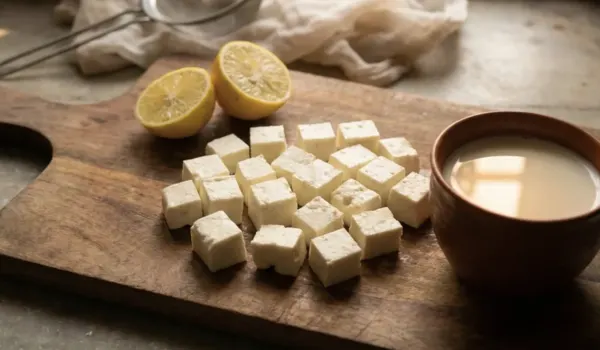
Homemade paneer can become hard when too much moisture is removed from the curds. Excessive heating, too much acid, prolonged pressing, or squeezing out too much whey can all affect the final texture.
The most common reasons include:
- Overheating the milk after adding the acidic ingredient
- Using too much lemon juice or vinegar
- Boiling the curds for too long
- Pressing the paneer with excessive weight
- Pressing it for too long
- Using low-fat milk
- Allowing the curds to become too dry
- Using an incorrect milk-to-acid ratio
- Cutting or cooking homemade paneer too aggressively
- Using Low-Fat Milk
The type of milk has a major effect on homemade paneer.
Full-fat milk generally produces richer and softer paneer because it contains more fat and solids. Lower-fat milk can produce paneer with a firmer or drier texture.
If your priority is soft, restaurant-style paneer, full-fat milk is generally a better starting point.
Does buffalo milk make softer paneer?
Buffalo milk is rich in fat and milk solids and can produce a rich, firm paneer. Cow’s milk can also produce good homemade paneer, but the final texture depends on its fat and solids content and the preparation method.
- Adding Too Much Lemon Juice or Vinegar
Acid is needed to separate the milk into curds and whey. However, adding more acid than necessary can negatively affect the texture.
A common mistake is adding a large amount of lemon juice or vinegar because the milk has not separated immediately.
Instead, add the acid gradually and stop once the milk has properly separated.
Too much acid can result in a firmer, more crumbly texture.
- Boiling the Curds for Too Long
Once the milk separates, the curds do not need prolonged cooking.
Continued heating can cause the curds to lose more moisture and become tougher.
After the milk has separated into curds and whey, remove it from the heat or follow the recipe’s recommended process for draining.
- Pressing the Paneer Too Hard
Pressing removes whey and gives paneer its shape.
However, excessive pressure can remove too much moisture and produce a dense, hard block.
If you want soft paneer, use moderate pressure rather than placing a very heavy object on top of it.
- Pressing It for Too Long
The duration of pressing matters as much as the pressure.
Leaving paneer under heavy weight for a long period can make it considerably firmer.
For softer paneer, press only until the block holds its shape and excess whey has drained.
- Not Rinsing the Curds
After adding lemon juice or vinegar, some acid may remain on the curds.
Rinsing the curds with clean water can help remove residual acidity and improve the final flavour.
It can also help cool the curds after the heating process.
Do not squeeze the curds aggressively while rinsing because excessive squeezing can remove too much moisture.
- Allowing the Curds to Become Too Dry
After straining, the curds should remain moist before pressing.
If they sit uncovered for too long, moisture can escape and the resulting paneer may become dry and crumbly.
Transfer the curds to the muslin cloth and shape them without unnecessary delay.
- Using Too Much Heat
Very high heat can cause milk proteins to tighten excessively, which may contribute to a firmer texture.
Heat the milk properly and control the temperature once coagulation begins.
Avoid aggressively boiling the separated curds.
How to Make Soft Homemade Paneer
A few simple steps can make a noticeable difference.
Step 1: Use Fresh Full-Fat Milk
Start with good-quality full-fat milk for a richer and softer result.
Step 2: Heat the Milk Properly
Bring the milk close to a boil while stirring occasionally so that it does not stick to the bottom.
Step 3: Add Acid Gradually
Use diluted lemon juice or another suitable food acid and add it gradually while stirring gently.
Stop adding acid once the milk has clearly separated into curds and whey.
Step 4: Avoid Prolonged Cooking
Once separation is complete, do not continue boiling the curds unnecessarily.
Step 5: Strain the Curds
Pour the mixture through a clean muslin or cheesecloth.
Step 6: Rinse the Curds
Gently rinse the curds with clean water to remove residual acidity.
Step 7: Drain Without Excessive Squeezing
Allow the whey to drain naturally. Avoid squeezing the cloth aggressively.
Step 8: Press Moderately
Fold the cloth around the curds and place a moderate weight on top.
Press until the paneer holds together but still retains some moisture.
Homemade Paneer: Common Problems and Solutions
| Problem | Possible Cause | Solution |
| Paneer is very hard | Too much moisture removed | Reduce pressing time and pressure |
| Paneer is rubbery | Excessive heating | Avoid prolonged cooking |
| Paneer is crumbly | Too much acid or excessive drying | Add acid gradually and retain moisture |
| Paneer has sour taste | Excess acid remains | Rinse curds thoroughly |
| Paneer is too soft | Insufficient pressing | Press slightly longer |
| Paneer breaks while cutting | Curds were not pressed sufficiently | Allow the block to set properly |
| Paneer is dry | Low-fat milk or excessive pressing | Use full-fat milk and moderate pressure |
How to Fix Hard Homemade Paneer
If your homemade paneer has already become hard, you may still be able to improve its texture before using it in a dish.
Soak It in Warm Water
Place the paneer pieces in warm water for some time before cooking. This can help them absorb some moisture and become softer.
For curry-based dishes, you can also add the paneer directly to the prepared gravy and allow it to heat gently.
Avoid Overcooking It Again
Hard paneer can become even tougher if cooked for a long time.
Add paneer toward the later stages of cooking and heat it gently.
Why Does Paneer Become Hard After Cooking?
Sometimes the homemade paneer is soft initially but becomes hard after being added to a curry.
This usually happens because the paneer is exposed to high heat for too long.
Deep-frying paneer until it develops a very firm crust can also make the interior feel chewy.
For softer paneer:
- Cut it into pieces of suitable size.
- Avoid prolonged frying.
- Do not boil it in the gravy for a long time.
- Add it closer to the end of cooking.
- Soak fried or firm paneer briefly in warm water before adding it to the gravy if needed.
Can You Make Soft Paneer Without Lemon Juice?
Yes. Other food acids, such as vinegar or citric acid, can also be used to coagulate milk.
The important factor is not simply which acid you use but how much you use and how you handle the curds.
Add the chosen coagulant gradually rather than using an excessive amount.
Why Is My Paneer Rubbery Instead of Soft?
Rubbery paneer is often associated with excessive heating or excessive moisture removal.
If the milk is heated aggressively after coagulation, the curds can become firmer. Heavy pressing can make the problem worse.
Try reducing both the cooking time and pressing pressure during your next batch.
Does More Cream Make Paneer Softer?
Adding dairy fat can change the richness and texture of paneer, but it is not necessary for making soft paneer.
For most homemade preparations, using suitable full-fat milk and controlling the coagulation and pressing process are more important.
Tips for Soft Homemade Paneer
- Use fresh full-fat milk.
- Add the acid gradually.
- Do not add excessive lemon juice or vinegar.
- Stop heating once the milk has separated.
- Rinse the curds after straining.
- Avoid squeezing out all the whey.
- Do not press the paneer with excessive weight.
- Avoid pressing for unnecessarily long periods.
- Store finished paneer properly.
- Avoid prolonged cooking when using paneer in curries.
Frequently Asked Questions
Why is my homemade paneer hard?
The most common causes are excessive heating, too much acid, excessive pressing, prolonged pressing, or using milk with lower fat and solids.
How can I make homemade paneer soft and spongy?
Use full-fat milk, add the coagulant gradually, avoid overcooking the curds, retain some moisture, and press the paneer only enough for it to set.
How long should paneer be pressed?
The required time depends on the desired firmness and the amount of moisture in the curds. Press only until the paneer forms a stable block rather than pressing it until completely dry.
Can hard paneer become soft again?
Yes, soaking paneer briefly in warm water can improve its texture. In curries, gently heating it in gravy can also help, although extremely over-processed paneer may not return completely to its original texture.
Why does paneer break while cooking?
Paneer may break if it is too soft, not properly set, or handled roughly. Excessive stirring can also cause softer paneer pieces to break apart.
Conclusion
Soft homemade paneer depends mainly on milk quality, controlled coagulation, moisture retention and moderate pressing. Using full-fat milk, adding acid gradually, avoiding prolonged heating and not pressing the curds too aggressively can help produce a softer block.
If paneer becomes hard after cooking, soaking it in warm water and avoiding prolonged cooking can often improve its texture.
 Gaurav Sharma