
Some dogs become extremely distressed when they are left alone. They may bark continuously, whine, scratch doors, destroy furniture, pace around the house, or try to escape. Some dogs may also urinate or defecate indoors despite being properly house-trained. These behaviours can be signs of separation anxiety, a condition in which a dog experiences significant distress when separated from its owner or another person to whom it is strongly attached.
Helping a dog with separation anxiety usually requires patience and gradual training. Punishment is not an effective solution because the behaviour is generally connected to distress rather than deliberate disobedience.
Understand the Signs of Separation Anxiety
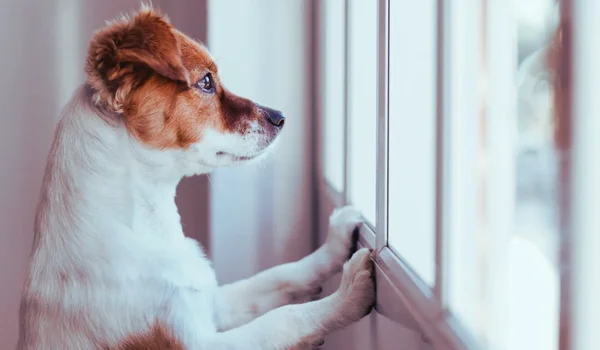
The first step is to identify what happens when your dog is alone. Separation-related behaviour may begin shortly after the owner leaves and can include barking, howling, whining, pacing, drooling, scratching doors, chewing furniture, attempting to escape, or having accidents indoors.
Some dogs become anxious even before the owner leaves. They may follow the person around the house, become restless when keys or shoes are picked up, or become unusually excited when the owner prepares to go out.
A camera or other safe monitoring method can sometimes help you understand what your dog does after you leave.
Start With a Veterinary Checkup
Before assuming that a behaviour problem is caused entirely by separation anxiety, consider having your dog examined by a veterinarian.
Pain, illness, age-related changes, urinary problems, and other health conditions can sometimes contribute to changes in behaviour or house-training.
A veterinarian can also help determine whether your dog may need additional behavioural support.
Create a Comfortable Safe Space
Give your dog a comfortable area where it can relax. This might be a quiet room, a suitable crate if the dog is already comfortable with crate use, or a designated resting area.
Place comfortable bedding, safe toys, and familiar items in the area. Make sure the space is not used as punishment.
If your dog becomes more anxious when confined, forcing it into a crate or closed room may make the problem worse. The goal is to create a place associated with safety and relaxation.
Build Independence at Home
Dogs with separation anxiety may become overly dependent on their owners. Gradually encouraging independent behaviour can help.
For example, reward your dog for calmly resting on its bed while you move around another part of the house. You can gradually increase the distance and duration.
Do not constantly encourage your dog to follow you from room to room. Instead, provide opportunities for the dog to relax independently while still feeling safe.
Practice Very Short Departures
One of the most useful approaches is gradual desensitisation. Start with absences that are short enough that your dog remains calm.
For example, you might briefly step outside the door and return before your dog becomes distressed. Repeat this calmly and gradually increase the time away.
The exact starting point depends on the individual dog. If the dog becomes highly anxious during a particular duration, return to a shorter period rather than pushing through the distress.
Progress may take time, so avoid expecting the dog to tolerate long periods alone immediately.
Make Leaving and Returning Calm
Some owners unintentionally make departures and arrivals highly emotional. Excited goodbyes can increase anticipation before the owner leaves.
Try to keep departures and returns calm and predictable. You do not need to ignore your dog completely, but avoid turning every departure or arrival into a major event.
A consistent routine can help the dog understand that leaving is temporary and that the owner will return.
Reduce the Importance of Departure Cues
Dogs can learn that certain actions predict being left alone. Picking up keys, putting on shoes, carrying a bag, or putting on a particular jacket may cause anxiety before the owner even leaves.
You can gradually make these signals less meaningful. For example, occasionally pick up your keys and then sit down without leaving.
Repeat such exercises when your dog is calm. Over time, the dog may become less reactive to these signals.
Provide Appropriate Mental Stimulation
Mental activities can give your dog something constructive to focus on. Safe food puzzles, chew items, scent games, and suitable toys may help some dogs relax.
However, enrichment should not be treated as a complete cure for severe separation anxiety. A highly distressed dog may be unable to focus on a toy or food.
Choose only items that are safe for your individual dog and avoid leaving anything unsupervised if it could be swallowed or broken apart.
Maintain Regular Exercise
Appropriate physical activity can support overall wellbeing and may help some dogs settle more easily.
Daily walks, play, training, and other suitable activities can provide physical and mental stimulation.
The amount of exercise should match the dog’s age, breed, fitness, and health. Avoid assuming that exhausting the dog will solve separation anxiety. Anxiety is a behavioural and emotional problem that usually requires gradual training as well.
Avoid Punishment
Never punish your dog for barking, chewing furniture, scratching doors, or having an accident while you are away.
The dog may be experiencing significant distress and may not understand why it is being punished after the event. Punishment can also increase fear and anxiety.
Instead, focus on preventing situations that cause severe distress and gradually teaching the dog that being alone is safe.
Avoid Leaving the Dog Alone for Too Long During Training
If possible, arrange suitable care while you are working on the problem. Depending on the situation, a trusted person, pet sitter, family member, or appropriate daycare arrangement may help reduce the number of long absences.
This does not replace training, but it can prevent repeated episodes of severe distress while the dog is learning to cope.
Watch for Escape Behaviour
Some dogs with severe separation anxiety attempt to escape from rooms, crates, windows, or doors. This can result in serious injuries.
Make the environment as safe as possible. Secure doors and windows, remove dangerous objects, and avoid confinement methods that cause the dog to panic.
If your dog repeatedly attempts to break through doors or windows, seek professional veterinary or behavioural advice rather than simply using stronger physical barriers.
Work With a Qualified Professional
If separation anxiety is severe or does not improve with gradual training, seek help from a veterinarian or qualified veterinary behaviour professional.
Professional support can help identify the dog’s specific triggers and create a structured behaviour modification plan.
In some cases, a veterinarian may consider medication as part of treatment. Medication should only be used under veterinary supervision and is generally considered alongside appropriate behavioural training rather than as a substitute for it.
Be Patient With Progress
Separation anxiety rarely disappears overnight. Some dogs improve within weeks, while others require a longer period of carefully managed training.
Avoid increasing the duration of absences too quickly. If your dog repeatedly becomes distressed, the training may be progressing faster than the dog can handle.
Keep track of your dog’s responses so you can identify gradual improvements and recognise situations that cause setbacks.
Conclusion
Helping a dog with separation anxiety requires patience, consistency, and an understanding of why the behaviour occurs. Create a comfortable environment, encourage independence, practise very short departures, reduce anxiety around departure cues, and reward calm behaviour.
Avoid punishment and do not expect the dog to suddenly tolerate long periods alone. If the anxiety is severe, involves destructive escape attempts, or does not improve with gradual training, consult a veterinarian or qualified behaviour professional. With an appropriate plan and consistent support, many dogs can gradually become more comfortable spending time away from their owners.