
A good credit score can improve your chances of getting a loan, but it does not guarantee approval. Lenders consider several factors before making a lending decision, including income, employment or business stability, existing debts, repayment obligations, loan amount, documentation, and their own lending policies.
Therefore, if your loan application is rejected despite having a good credit score, the first step is to understand the reason for rejection rather than assuming that your credit score is the problem.
Ask the Lender Why the Application Was Rejected
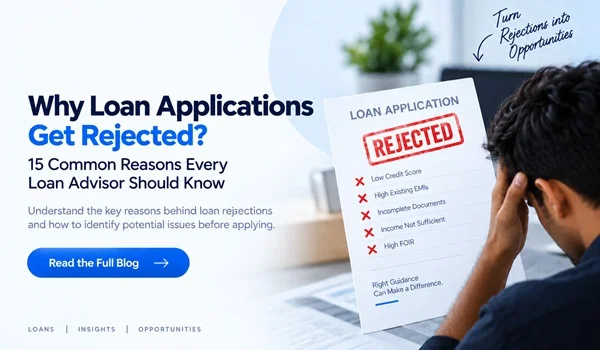
Start by asking the bank or financial institution for the reason for rejection.
A lender may consider factors beyond your credit score when assessing an application. For example, employment status, income, existing EMI obligations, repayment history, and information in your credit report can all influence the decision.
If the lender provides a rejection reason, keep it for your records. Understanding the specific reason can help you decide what needs to be corrected before making another application.
Check Your Complete Credit Report
Do not look only at the three-digit credit score. Review the complete credit report.
Check for:
- Existing loan accounts
- Credit card balances
- Outstanding amounts
- Payment history
- Recent credit enquiries
- Accounts that do not belong to you
- Duplicate loan accounts
- Incorrect personal information
- Incorrect overdue amounts
- Incorrect account status
Sometimes a person may have a good credit score but still have incorrect information in the detailed credit report. Such errors can affect a loan application.
Look at Your Existing EMI Obligations
A good credit score does not necessarily mean that you have enough repayment capacity for another loan.
Lenders may compare your existing loan obligations with your income when evaluating a new application.
For example, someone may have a strong repayment record but already have several EMIs. A lender may decide that adding another large monthly obligation does not fit its lending criteria.
Before applying again, calculate your total existing monthly repayments and compare them with your stable monthly income.
Check Your Income and Employment Profile
Income stability is another important consideration.
For salaried applicants, lenders may examine factors such as:
- Monthly salary
- Employment continuity
- Employer details
- Salary credits
- Recent changes in employment
For self-employed applicants, lenders may examine income records, business stability, bank statements, and tax-related documents.
A strong credit score cannot compensate for income that does not meet a particular lender’s eligibility requirements.
Review the Loan Amount
Sometimes the problem is not your credit history but the amount you requested.
A lender may determine that the requested loan amount is too high compared with your income, existing obligations, or its internal eligibility criteria.
Review the amount you applied for and understand how it compares with your repayment capacity.
If you need a large loan, improving your documented income position or reducing existing obligations may be more useful than simply applying repeatedly.
Check Recent Credit Enquiries
Your credit report records enquiries made when lenders check your credit information.
Several recent applications can indicate that you have been seeking credit from multiple lenders. Multiple applications within a short period can also affect how your credit profile is viewed.
If you have recently applied for several loans or credit cards, avoid making many additional applications immediately. Instead, first understand why the earlier application was rejected.
Also check whether every enquiry listed in your report was actually authorized by you.
Look for Errors in Your Credit Report
An application can be affected by incorrect information in your credit report.
Possible errors include:
- A loan that does not belong to you
- Wrong outstanding balance
- Incorrect payment history
- Incorrect overdue amount
- Duplicate accounts
- Incorrect personal details
- An enquiry that you do not recognize
If you find an error, contact the relevant lender and raise a dispute with the appropriate credit bureau.
Keep copies of your complaint and any supporting documents until the issue is resolved.
Check Co-Signed or Guaranteed Loans
Credit obligations connected to joint, co-signed, or guaranteed accounts can also matter.
If you have guaranteed a loan for another person, check its repayment status carefully. Missed payments on such accounts can affect the credit profile associated with the account.
Similarly, if you have a jointly held loan, review the account to make sure that payments are being made correctly.
Check Your Documents
A loan application can also be affected by incomplete or inconsistent documentation.
Depending on the loan type, lenders may request documents such as:
- Identity proof
- Address proof
- Salary slips
- Bank statements
- Income documents
- Employment information
- Tax-related documents
- Property or vehicle documents, where applicable
Check whether the information in your application matches your supporting documents.
A mismatch in income, employment information, address, or other application details may require clarification.
Do Not Immediately Apply to Many Lenders
After a rejection, it can be tempting to submit applications to several other banks and financial institutions.
First determine the reason for the rejection.
If the issue is an incorrect credit-report entry, excessive existing obligations, insufficient income, or incomplete documentation, applying elsewhere without addressing the underlying issue may not solve the problem.
Repeated applications can also create additional credit enquiries, so it is better to understand your financial position before applying again.
Consider Reducing Existing Debt
If your existing EMI burden is high, reducing outstanding debt may improve your overall financial position.
Depending on your circumstances, you might focus on:
- Paying down expensive outstanding debt
- Avoiding unnecessary new borrowing
- Reducing credit-card balances
- Maintaining timely EMI payments
- Keeping sufficient funds for existing obligations
A lower debt burden can make your overall repayment position easier to manage.
However, do not take another loan simply to make your credit profile appear better unless you have carefully considered the cost and repayment requirements.
Check the Lender’s Eligibility Criteria
Different lenders can have different internal lending policies.
A high credit score improves your overall credit profile, but lenders can still have their own requirements relating to income, employment, age, location, loan amount, existing obligations, and documentation.
Therefore, rejection by one lender does not necessarily mean that your credit report is defective. It may mean that your application did not meet that particular lender’s eligibility criteria.
Keep a Record of the Rejection
Maintain copies of:
- Loan application details
- Rejection communication
- Reason provided by the lender
- Credit report
- Relevant bank statements
- Documents submitted
- Correspondence with the lender
These records can help if you later discover an error or need to clarify information related to the application.
What to Do Before Applying Again
Before submitting another loan application, follow a simple checklist:
- Find out why the previous application was rejected.
- Review your complete credit report.
- Check existing EMIs and outstanding debt.
- Verify your income and employment information.
- Check recent credit enquiries.
- Correct any inaccurate credit-report information.
- Make sure your documents are complete and consistent.
- Check the lender’s eligibility requirements.
- Apply only when you understand your financial position.
This approach is generally more useful than applying repeatedly without knowing the reason for rejection.
Final Thoughts
A good credit score is an important part of a loan application, but it is only one factor. Lenders may also consider income, employment or business stability, existing EMIs, outstanding debt, documentation, recent credit enquiries, and their own lending policies.
If your loan application is rejected despite a good credit score, first ask the lender for the reason. Then review your complete credit report, check your repayment obligations and income, look for errors, and correct inaccurate information before considering another application.
Taking time to identify the actual reason for rejection can help you prepare a more complete and suitable loan application in the future while avoiding unnecessary applications and additional credit enquiries.