
Doing business with a new company can create valuable opportunities, but it also involves financial and commercial risks. Whether you are buying products, hiring a service provider, entering into a partnership, giving credit, or accepting an investment proposal, it is important to know who you are dealing with.
A company may have a professional website, attractive brochures, social media profiles, and convincing representatives, but these things alone do not prove that the business is genuine. Before transferring money or signing an important agreement, businesses should carry out basic verification and due diligence.
Check the Company’s Legal Identity
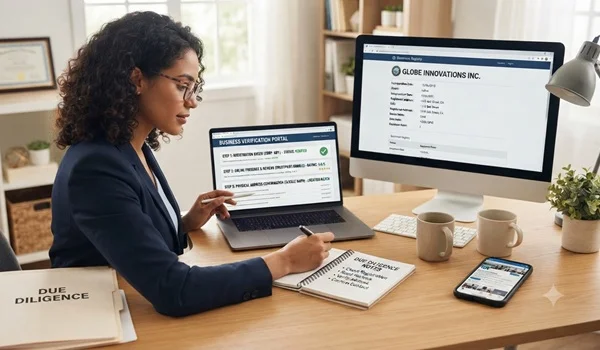
The first step is to find out whether the company legally exists.
Ask the business for its official legal name and registration details. In India, a company registered under the Companies Act can generally be checked through official corporate records.
Make sure the name given by the company matches the name appearing on its documents. Be careful if a representative uses one company name while asking you to make payments to an unrelated individual or another business.
Also check whether the company is currently active and whether the basic information provided by the business appears consistent.
Verify the GST Details
If the company deals in taxable goods or services, checking its GST information can provide another layer of verification.
Compare the GST details provided on invoices with the business name, address, and other available information.
A mismatch between the invoice details and the company information should be investigated before making a significant payment.
However, having a GST registration by itself does not guarantee that every transaction with the business is safe. It is only one part of the overall verification process.
Check the Company’s Address
Verify the company’s registered or business address.
Look for consistency between the address mentioned on contracts, invoices, company records, correspondence, and other business documents.
A company operating from a legitimate office, factory, warehouse, or commercial location may provide additional confidence, depending on the nature of the business.
For high-value transactions, consider independently verifying the physical location rather than relying only on an address provided by the company’s representative.
Research the Company’s Business History
Find out how long the company has been operating and what type of business it conducts.
Look for information about its products, services, management, industry presence, and previous business activities.
A newly established company is not automatically suspicious. Many legitimate businesses are young companies. However, if someone claims to have operated for many years but there is little verifiable information about the business, further investigation may be appropriate.
Check the Directors or Key People
For important business transactions, learn about the people behind the company.
Check the names of directors or key management personnel where such information is publicly available. Consider whether their professional background appears consistent with the business they claim to operate.
Be cautious if representatives refuse to provide basic company information or become uncomfortable when asked reasonable verification questions.
At the same time, avoid making conclusions based only on limited online information. The purpose of checking management details is to verify the business, not to judge individuals without evidence.
Review the Company’s Website and Online Presence
A professional website can help you understand a company’s business activities, but it should not be treated as proof that the company is genuine.
Check whether the website contains consistent information about the company name, address, contact details, products, services, and management.
Look for inconsistencies such as different company names, unexplained address changes, copied content, unrealistic claims, or contact details that do not match official business records.
Social media profiles can also provide useful background information, but they should be treated as supplementary evidence rather than official proof.
Verify Bank Account Details
One of the most important checks before making a payment is the bank account information.
Ideally, the beneficiary name should correspond with the legal business or the entity named in the agreement and invoice.
Be particularly careful when someone suddenly asks you to change the bank account or transfer money to a personal account. Verify such requests independently through a trusted communication channel.
Do not rely solely on a message saying that the company’s bank details have changed.
Ask for Business Documents
Depending on the nature of the transaction, you may ask the company for relevant business documents.
These may include:
- Company registration details
- GST information
- PAN details where appropriate
- Business address
- Quotations and invoices
- Purchase orders
- Agreements and contracts
- Relevant licences or approvals
- References from previous customers or business partners
The documents required will depend on the type and size of the proposed transaction.
For sensitive documents, verify the information rather than assuming that a document is genuine simply because it looks official.
Speak With Existing Customers or Suppliers
Business references can sometimes provide valuable information.
If the company is willing to provide references, contact them independently and ask about their experience.
For example, you may ask whether the company delivered products on time, provided the agreed services, handled complaints properly, and followed payment or contractual commitments.
Do not rely entirely on references supplied by the company. Where possible, conduct independent research as well.
Check for Complaints and Disputes
Search for credible information about complaints, unresolved business disputes, regulatory action, or other significant concerns.
A complaint does not automatically prove that a company is fraudulent or unreliable. Businesses can have genuine disputes with customers, suppliers, employees, or competitors.
The important point is to look for patterns and verify the underlying facts before making a decision.
Be Careful With Unusually Attractive Offers
An unusually low price, guaranteed return, urgent investment opportunity, or pressure to make immediate payment should receive additional scrutiny.
For example, if a supplier offers goods at a price significantly below normal market levels and demands full advance payment immediately, investigate the offer carefully.
Legitimate businesses can offer discounts, but a highly unusual offer combined with pressure, secrecy, or inconsistent documentation can be a reason to pause and verify the transaction.
Start With a Small Transaction
If you are dealing with a new supplier or service provider and the situation allows it, consider starting with a smaller transaction.
This can help you evaluate product quality, delivery performance, communication, invoicing, and customer support before committing a large amount of money.
For large contracts, you can also consider appropriate milestones, payment protections, inspection requirements, or other contractual safeguards.
Use a Written Agreement
Do not rely only on verbal promises for important business transactions.
A written agreement should clearly explain the products or services, price, payment terms, delivery responsibilities, deadlines, warranties, termination conditions, dispute-resolution process, and other important terms.
Both parties should understand what they are agreeing to before the transaction begins.
Use Professional Due Diligence for Large Deals
For high-value transactions, ordinary online research may not be sufficient.
Businesses considering major investments, acquisitions, partnerships, long-term contracts, or significant credit arrangements may consider professional due diligence.
Depending on the transaction, this may involve legal, financial, tax, compliance, ownership, and commercial checks.
The cost of verification can be small compared with the potential loss from entering into a poorly understood business relationship.
Warning Signs to Watch For
Some common warning signs include:
- Refusal to provide basic company details
- Different names appearing on invoices and agreements
- Pressure to make immediate payment
- Requests for payment to unrelated personal accounts
- Unclear or changing business addresses
- Inconsistent registration information
- Unrealistic financial promises
- Poor documentation
- Avoidance of written contracts
- Unwillingness to answer reasonable verification questions
One warning sign does not necessarily prove that a company is fraudulent. However, several unexplained warning signs should encourage you to conduct more thorough due diligence.
Conclusion
Checking whether a company is genuine before doing business is an important part of commercial risk management. Verify the company’s legal identity, GST information, address, management details, business history, bank details, and relevant documents. Research the company’s reputation and use written agreements for important transactions.
Most importantly, do not allow urgency or attractive offers to replace proper verification. Taking time to check a new business partner or supplier before sending money can help protect your finances, reputation, and long-term business interests.
 admin